 Mandats Administratifs acceptés

Complete Guide: How to choose the right plastic chair glides for restaurants
Key points covered

Restaurant furniture is widely distributed in France, and its chairs are particularly appreciated for their value for money and robustness. Over time, the plastic tips naturally wear out, and it becomes mandatory to replace them. This is mainly to maintain good protection for floors (parquet, wood, PVC, Lino…) and limit unpleasant noises. This detailed guide will help you choose the plastic caps suited to each model of table from the restaurant brand.
Restaurant chair models and their suitable plastic glides
La marque Restaurant propose une gamme variée de chaises conçues pour répondre aux besoins spécifiques du secteur de la restauration. Ces modèles allient fonctionnalité, durabilité et esthétique pour créer un environnement accueillant et confortable pour les clients.
Gamme Classique
Caractéristiques techniques
Les chaises de la gamme Classique se distinguent par leur structure robuste en bois massif, offrant une stabilité exceptionnelle et une durée de vie prolongée. Le dossier ergonomique et l’assise rembourrée assurent un confort optimal pour les clients, même lors de repas prolongés. Ces modèles sont disponibles en plusieurs finitions de bois et options de tissus, permettant une personnalisation selon le style du restaurant. Les pieds sont équipés d’embouts en plastique spécialement conçus pour protéger les sols et réduire le bruit. Pour cette gamme, les embouts recommandés sont de forme ronde, avec un diamètre de 25 mm, adaptés à une épaisseur de tube de 2 mm et une profondeur d’insertion de 15 mm.
Gamme Moderne
Caractéristiques techniques
La gamme Moderne se caractérise par des lignes épurées et des matériaux contemporains. Ces chaises allient acier inoxydable et plastique moulé de haute qualité pour créer un design léger et facile d’entretien. L’assise et le dossier sont conçus pour offrir un soutien ergonomique tout en conservant une esthétique minimaliste. Ces modèles sont empilables, facilitant le rangement et l’optimisation de l’espace. Les pieds sont dotés d’embouts en plastique antidérapants pour une stabilité accrue. Pour cette gamme, les embouts recommandés sont de forme carrée, avec un côté de 20 mm, adaptés à une épaisseur de tube de 1,5 mm et une profondeur d’insertion de 12 mm.
Gamme Extérieure
Caractéristiques techniques
Les chaises de la gamme Extérieure sont spécialement conçues pour résister aux intempéries et aux variations de température. Fabriquées en aluminium traité et en résine tressée résistante aux UV, elles offrent une durabilité exceptionnelle sans compromettre le confort. Le design ergonomique assure un soutien adéquat pour les longues soirées en terrasse. Ces modèles sont légers, faciles à déplacer et empilables pour un rangement pratique. Les pieds sont équipés d’embouts en plastique résistants à l’usure et à l’humidité. Pour cette gamme, les embouts recommandés sont de forme ovale, avec des dimensions de 30 mm x 15 mm, adaptés à une épaisseur de tube de 2,5 mm et une profondeur d’insertion de 18 mm.
En conclusion, la marque Restaurant offre une diversité de chaises adaptées à tous les styles et besoins des établissements de restauration. Chaque gamme est conçue avec soin, en tenant compte des exigences spécifiques du secteur, assurant ainsi confort, durabilité et esthétique pour une expérience client optimale.
Tips suitable for restaurant chairs
Depending on the model of your restaurant chairs, you will need to choose insert glides for hollow legs, or wrap-around plastic glides for solid or hollow chair legs.
Insert plastic glides: A solution for hollow legs
The insert tips , also called insertion tips or internal tips, are inserted inside the chair, table, or armchair leg. Here, the plastic cap is held in place by the pressure exerted by the ribs against the inner walls of the leg tube. Particularly suitable for furniture with tubular metal legs, these tips offer a clean aesthetic because only their surface in contact with the floor is visible. Installing plastic glides requires precise measurement of the outer diameter or section of the tube, the internal dimensions of the hole, and also the insertion depth. See our Practical guide: How to measure a chair or table cap?
Insert plastic tips have the advantage of better resistance to being pulled out during lateral movements and are often preferred in professional environments for their durability. However, they can be difficult to replace, especially in the event of oxidation or deformation of the tube, and sometimes require the use of specific tools for their removal (pliers, utility knife, oil…)
Our Round insert plastic tips


Our Square insert plastic glides
-
 Glides for 65cm KARTELL CHARLES GHOST Philippe Starck stool – Set of 4
 -
 15-degree angled square chair leg insert | 30x30mm | Black
 -
 Square end cap for chair and table legs | 40mm to 150mm | Black/White
 -
 20° Angled square insert | 20mm-22mm-25mm-30mm | Black or White
 -
 M8-M10 threaded square insert | 20mm to 60mm | Black
 -
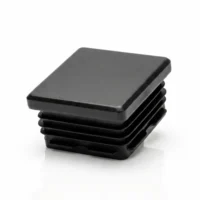 Thick square leg insert | 10mm to 60mm | Black or White
Our Rectangular insert plastic caps
Wrap-around plastic caps: Protection for solid and hollow legs
The wrap-around plastic caps encompass the outside of the chair leg, offering more complete protection. Installing the caps is generally simpler and does not require special tools. Particularly suitable for wooden legs or older furniture, they allow for compensating for slight irregularities in the legs and offer better distribution of forces. Nevertheless, their more visible appearance can impact the aesthetics of the furniture, and their cost is often higher than that of insert plastic tips. They are particularly recommended for the home or spaces requiring increased protection against humidity, such as covered terraces or dining rooms.
Our Round wrap-around caps
Not sure which plastic plug to choose?
The benefits of regularly replacing plastic caps on restaurant chairs
Regularly replacing your restaurant chair caps is an effective way to save money, enjoy optimal ease of use, and keep your chairs, tables, and armchairs for longer.
1. Effective protection for floors and sensitive surfaces
Regular replacement of chair feet is a quick and simple way to avoid premature floor wear. Whether it is parquet, tile, or laminate, chair feet in good condition effectively prevent scratches, damage, and marks. It is noted that, on average, regular maintenance of these feet can extend the lifespan of a floor by 5 to 7 years. This provides savings on renovation costs for your floors and coverings. Furthermore, the optimal weight distribution provided by new plastic feet avoids the formation of pressure points which, over time, can create irreversible damage to your parquet, linoleum, or laminate floors.
2. Less daily noise
The sound impact of chairs on the floor is a significant source of disturbance in living and work spaces. Regularly changed chair feet allow for a noticeable reduction in noise levels, which can reach 12 to 15 decibels. This acoustic improvement results in a more serene environment, conducive to concentration and well-being. Measured data show a decrease in vibrations and squeaking, which is particularly appreciated in shared spaces or apartments. Shock absorption during movement contributes to creating a calmer atmosphere, fostering communication and significantly reducing stress related to noise pollution.
3. Longer lifespan for your chairs
Scheduled replacement of chair feet plays a crucial role in furniture longevity. Studies show a 30% to 40% increase in the lifespan of chairs when their feet are kept in good condition. This protection extends to the entire structure: the legs are preserved from wear and humidity, assemblies undergo less mechanical stress, and overall stability is maintained. Regular replacement helps avoid gradual deformations that can affect leg alignment and compromise the structural integrity of the furniture.
4. Better user comfort
The impact of regular foot replacement on daily comfort is often underestimated. Feet in good condition facilitate movement, reduce the physical effort required, and improve chair stability. This ergonomic optimization results in reduced user fatigue and more natural posture. Movements become more fluid, cleaning is facilitated, and overall accessibility is improved. User satisfaction increases significantly, contributing to a more pleasant and functional environment, whether in a professional or domestic context.
Need to know more and find the right plastic plug for your restaurant chairs?


